The season is local
A month is not a reliable description of trail conditions. Elevation, shade, recent storms and regional climate can make neighboring landscapes feel far apart. A warm afternoon near a visitor center can coexist with snow on higher switchbacks. Desert temperatures can become dangerous while a mountain route elsewhere remains inaccessible.
Start with the park’s official planning and alerts pages, then read the forecast for the elevation and location of your intended walk. Check transport and entry arrangements separately from trail access. A valid entry reservation does not necessarily include parking, a shuttle seat, a wilderness permit or permission to enter a restricted route.
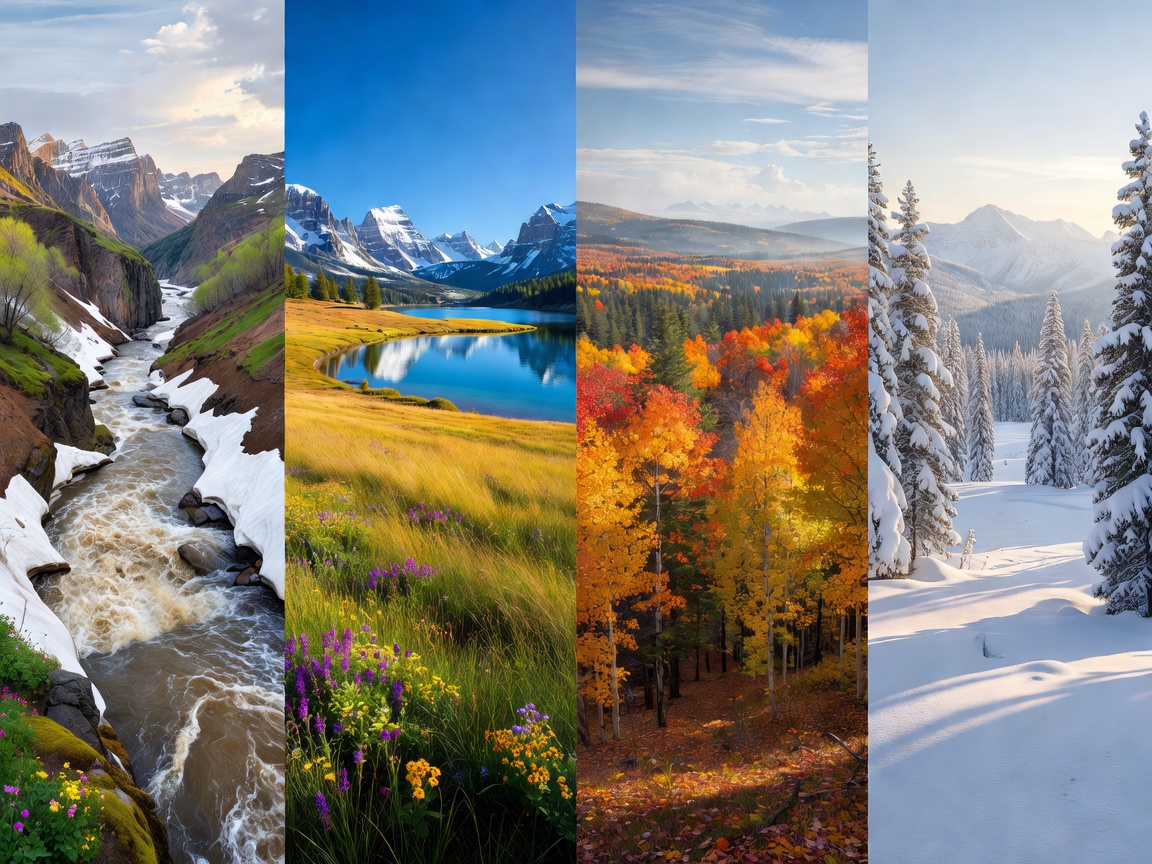
A season-by-season planning lens
Spring
Look beyond the first warm forecast. Snowmelt can swell streams, saturate trails and loosen rocks. Seasonal bridges may not yet be installed, and roads can remain closed after lower ground is clear. In Yosemite National Park, waterfalls draw visitors while higher-elevation access may still be limited. Choose a lower route when snow travel or unbridged water crossings exceed your skills.
Summer
Plan for heat in exposed country and changing weather in the mountains. At Grand Canyon National Park, an inviting descent can create a much harder return as temperatures rise. At Rocky Mountain National Park, altitude and thunderstorms can reshape an alpine plan. An early start may improve your margin, but it does not cancel a heat warning, lightning forecast or closure.
Autumn
Shorter days narrow the room for delays. Foliage season in Acadia National Park or Great Smoky Mountains National Park can bring busy roads and full parking areas alongside rapidly changing weather. Carry a headlamp even for a daytime outing, check transport end times and avoid assuming that a summer service schedule continues unchanged into fall.
Winter
Snow can conceal junctions, ice can transform easy grades and cold can shorten battery life. Some winter terrain involves avalanche exposure that requires specialist training and current local information. Foot traction alone does not make every snowy slope appropriate. If you lack winter navigation experience, choose a maintained low-consequence option or seek qualified local instruction rather than extending a summer route by habit.
Separate access, conditions and permission
Three checks prevent many avoidable surprises. First, can you reach the intended start using open roads or an operating shuttle? Second, is the walking route open and suitable under present conditions? Third, do you need an entry reservation, timed access, camping authorization or a route-specific permit? These are different questions and may be managed through different official systems.
Keep a copy of essential confirmations and instructions available offline. Read the conditions attached to a booking, including start locations and seasonal limitations. Do not rely on a navigation app to route around a closure; it may suggest an unsuitable road or fail to account for a legally restricted area. Respect signs and barriers even when an older itinerary describes access differently.
Official starting points
- Rocky Mountain National Park conditions for mountain access and seasonal context.
- Yosemite National Park conditions for road, trail and operational updates.
- Grand Canyon Hike Smart guidance for canyon-specific preparation.
- Acadia National Park trip planning for coastal visits and access requirements.
- Great Smoky Mountains National Park trip planning for local rules and current visitor information.
These links are planning sources, not a claim that we monitor their content continuously. Recheck the relevant authority near departure and at the trailhead. If an official warning conflicts with a guide or saved itinerary, follow the warning and revise your plan.
Choose photographs that fit the outing
Established viewpoints in Yosemite Valley, the coastal paths of Acadia and designated overlooks at Grand Canyon can offer strong compositions without leaving permitted surfaces. Choose a location whose access, walking distance and return fit your group. Sunrise and sunset add darkness to one side of the trip, so treat lighting plans as part of the hiking plan rather than a separate creative decision.
Stay behind barriers, keep gear out of narrow passing spaces and avoid trampling plants for a clearer foreground. Do not approach, feed or bait wildlife. Use distance and a longer lens when appropriate, and follow the park’s species-specific viewing rules. Check current restrictions on drones, artificial lighting and commercial photography. Protecting the scene is more important than reproducing a famous image.