Start with the outing, not a shopping list
A useful kit answers specific problems: finding the way, staying warm and dry, drinking safely, managing a minor injury and coping with an unexpected stop. The same pack will not suit every climate or route. Distance, remoteness, weather, group needs and the availability of reliable help should shape what you carry.
The National Park Service Ten Essentials guidance is a helpful starting framework. It is not a guarantee of safety or a requirement to buy a particular brand. Adapt the categories to local rules, understand their limitations and practice with unfamiliar equipment before relying on it outside.
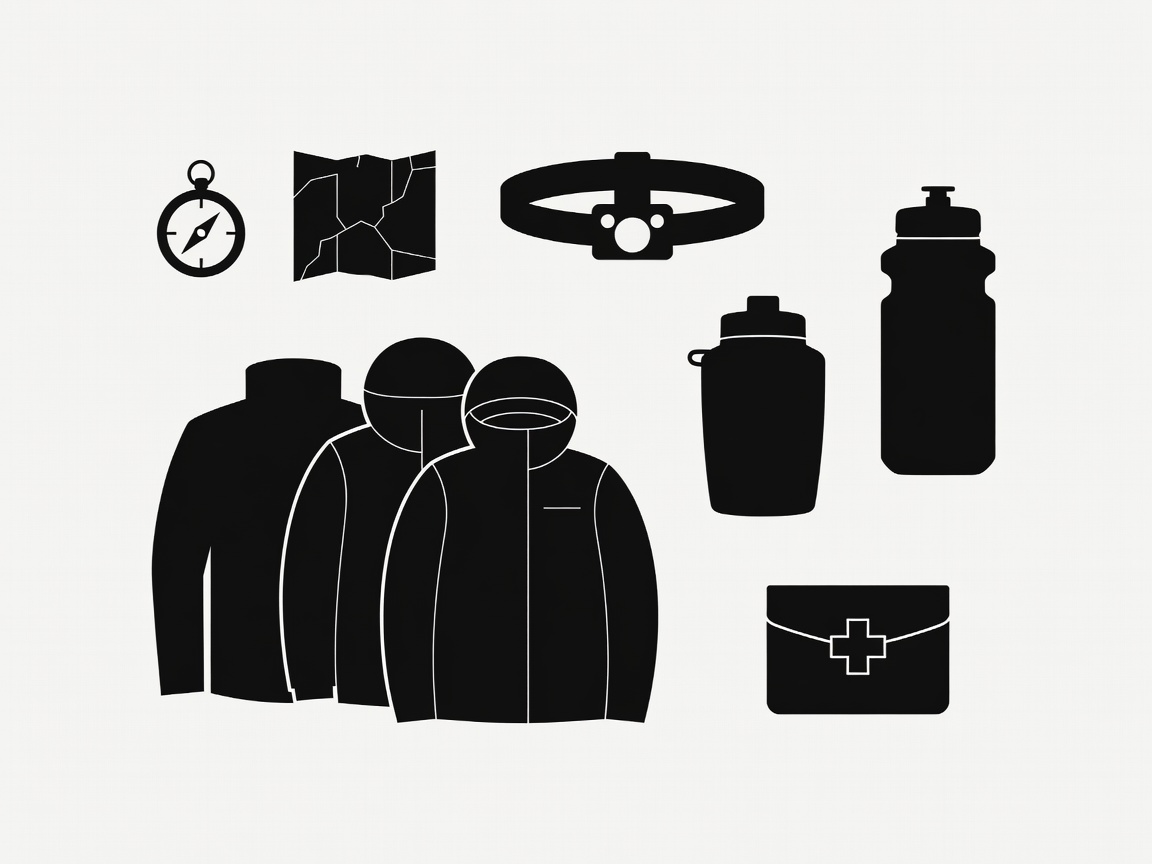
Navigation and light: keep a second option
Download appropriate mapping before leaving reception and verify that it is available offline. Know the route’s junctions, boundaries and retreat options. Carry a suitable map and compass when appropriate to the terrain, and learn to use them together. A screenshot of a trail line may omit contours, connecting paths and the surrounding area needed to recover from a mistake.
Protect electronic navigation from water and conserve battery power. A charged power bank can help, but it is not an independent navigation method. Carry a headlamp with usable power even when you expect to return during daylight. Phone lights are awkward for prolonged walking and consume a device you may need for communication or location information.
Water and food: plan around availability
Water needs vary with temperature, exertion, altitude, individual health and the length of the outing. Avoid treating a single quantity as universally sufficient. Identify reliable sources using current official information, check whether they are seasonal and carry enough capacity for the longest dry section plus a sensible contingency. A stream shown on a map may be dry or unsafe to reach.
Where treatment is needed, understand the specific hazards and your method’s limits. Filters and chemical treatments are not interchangeable in every situation, and ordinary backcountry treatment does not make chemically contaminated water safe. Follow product instructions and local public-health advice. Carry food you know you can eat while active, including something extra for a delay, and follow wildlife food-storage requirements.
Layers, footwear and sun protection
Choose footwear for fit, surface and expected conditions rather than appearance. Test it on shorter walks with the socks you plan to wear. New boots cannot compensate for poor pacing or a route beyond your experience. Blister prevention starts with fit and early attention to discomfort; do not wait until every step hurts to stop and adjust.
Bring weather protection appropriate to the forecast and an insulating layer for stopping. Exposed ground can be windy even when the trailhead feels comfortable. Keep critical dry clothing protected inside the pack. Sun protection may include suitable clothing, a hat, sunglasses and sunscreen used according to its instructions. Cloud cover, cool air and reflected light from snow do not remove sun exposure.
First aid and an unplanned stop
A compact first-aid kit is useful only when you understand its contents and the limits of your knowledge. Include personal medication and consider delays when planning access to it. Seek qualified first-aid instruction rather than expecting a kit or a short article to teach emergency care. Tell companions about relevant needs in a way that supports an agreed response.
Emergency shelter, a whistle and suitable repair items can help manage a stop or an equipment problem. Fire-starting equipment may be part of established essentials frameworks, but fire bans and environmental conditions always apply. Do not make a campfire your primary warmth strategy. In remote terrain, consider an appropriate satellite communication device, learn its operation and understand that rescue may still take substantial time.
Check the pack as a system
Distribute group equipment deliberately, but do not concentrate every critical item in one person’s pack. If the group becomes separated, each person should retain essential personal protection and a way to signal. Keep frequently used items accessible so that putting on a layer, eating or checking the route does not require emptying the bag in poor weather.
Checklist marks are temporary and are not saved. Print a copy if you need a durable record.
Before leaving, put the loaded pack on and walk around. Adjust straps, check balance and remove unnecessary duplicates without removing useful protection. No equipment list can make unsuitable conditions appropriate. Changing the route remains one of the most effective tools you have.